


Giving rest to the body let’s relax the souls

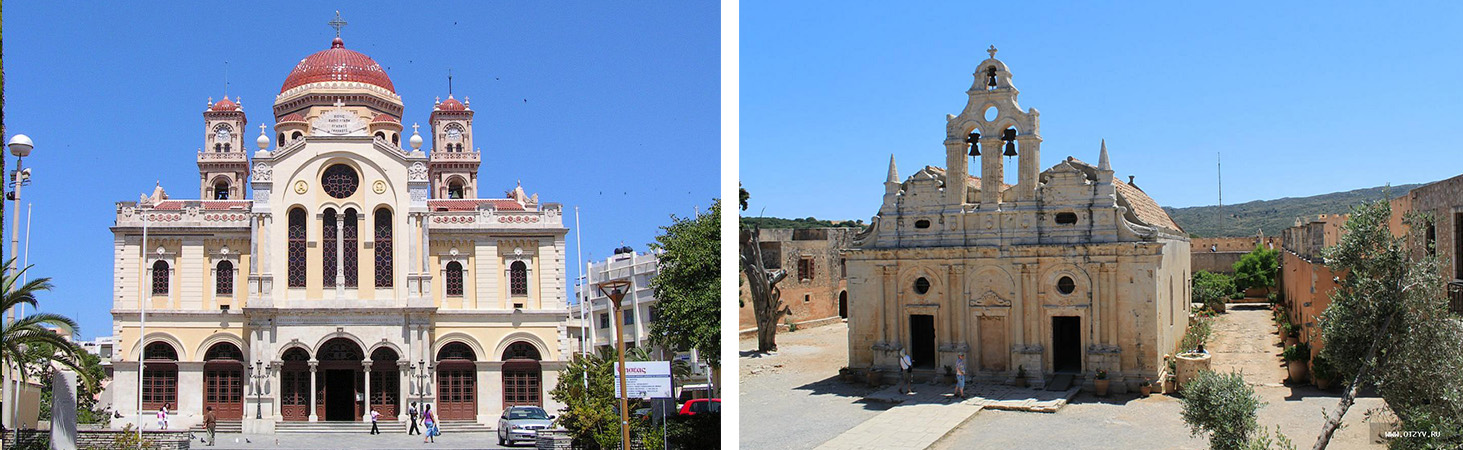
Crete is rich in Christian shrines, along with archeological sites and antic monuments of exceptional value. There are amazingly beautiful white churches, some of them keeping the richest collections of relics, are monasteries, whose cozy cobbled courtyards will give a rest in an atmosphere of calm and tranquility.
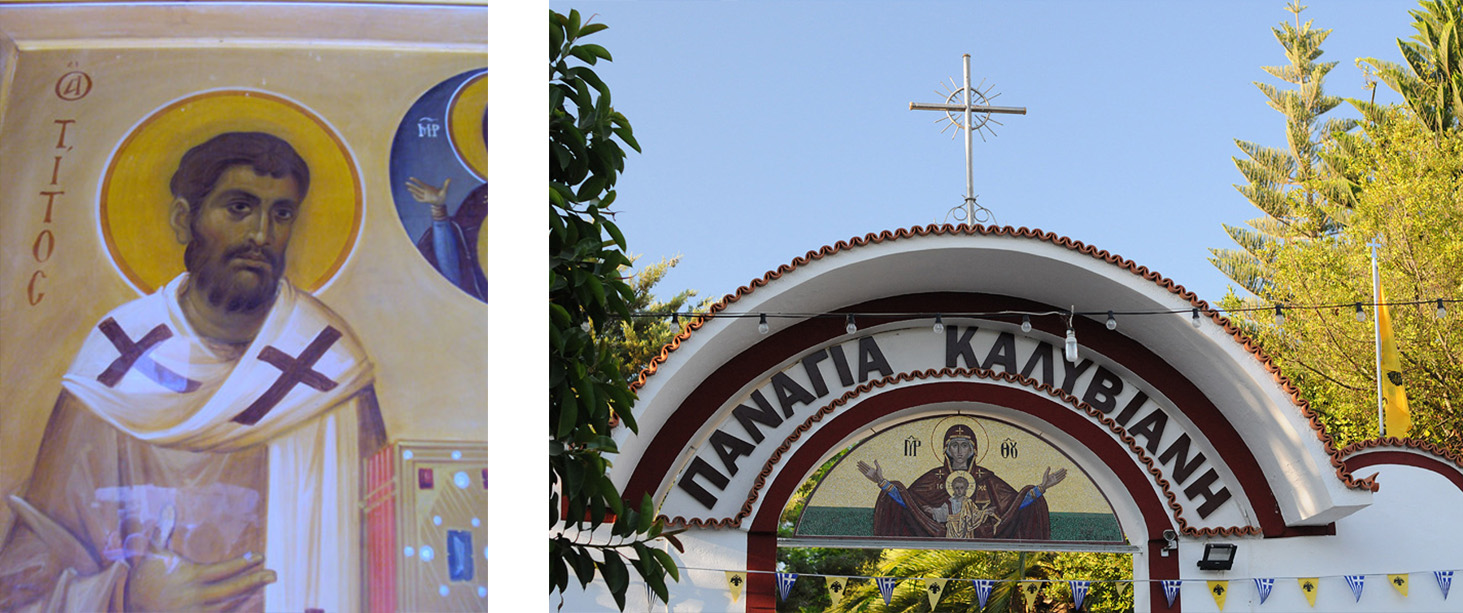
The Orthodox Church of Crete traditionally dates its history back to the apostle Paul, who preached here in the I century AD, and St. Titus became its first bishop. In the V century, a church was built in his honor in Gortyn, the former capital of Crete during the Roman Empire. The town was destroyed, but now the largest archeological reserve is established on its place with the same name.
The reserve Gortyn is located 46 km from Heraklion. Here architectural monuments of different historical eras are gathered on a vast territory. You will see ruins of the Basilica of St. Titus and by the way will take a walk on the excavation of Knossos Palace, will be able to see the Greek temple of Pythian Apollo, Roman baths and the sanctuary of the Egyptian deities Isis and Serapis. Within a few hours you will be able to see the change of times, manners, customs, and cultures from the Minoan civilization to the present day.
The Preveli monastery is located on the southern coast of Crete, 37 km from Rethymnon. A journey to the now active monastery will afford you an infinite pleasure – the path runs through the famous Kourtaliotiko gorge. There are howling winds and the unique Kourtaliotiko river, whose waters are not flowing as usual down from mountains, but are bursting from the rocks and leading you to a small chapel of St. Nicholas, barely perched at the foot of a sheer cliff. According to a legend, the saint brought here his people promising them that they will never be thirsty.
The monastery itself is located at an altitude of 170 m above sea level and consists of two complexes. The lower (Kato Preveli) was built in the XVI century and is now destroyed. In the war times the monastery served as a refuge. The most serious damage was caused to the monastery by soldiers of the Wehrmacht in 1941. The upper complex (Piso Preveli) was built in the XIX century and is now an acting monastery. In addition to the main church of the monastery, the complex includes a wonderful museum with icons and church utensils, a library, and a park of exceptional beauty.
The most famous acting convent is the Panagia Paliani, located near the village of Venerato. It is known from chronicles since 632. Here is preserved the Mother of God “Paliani”, a miraculous icon being inside of a myrtle tree and, according to a legend, only the righteous and children are able to see her face.
A very special filling will give a visit to the Church of the St. Myron and to his cell, carved into the rock. There is there a unique spring, filled with water from the depths of the cave. A ladle hangs there on the wall, and they say, that only a sinless person can scoop up and drink the holy water.
A characteristic feature of all monasteries of Crete is that at very different times they are always guarded its defenders, becoming a refuge for the islanders.
January, 2017